
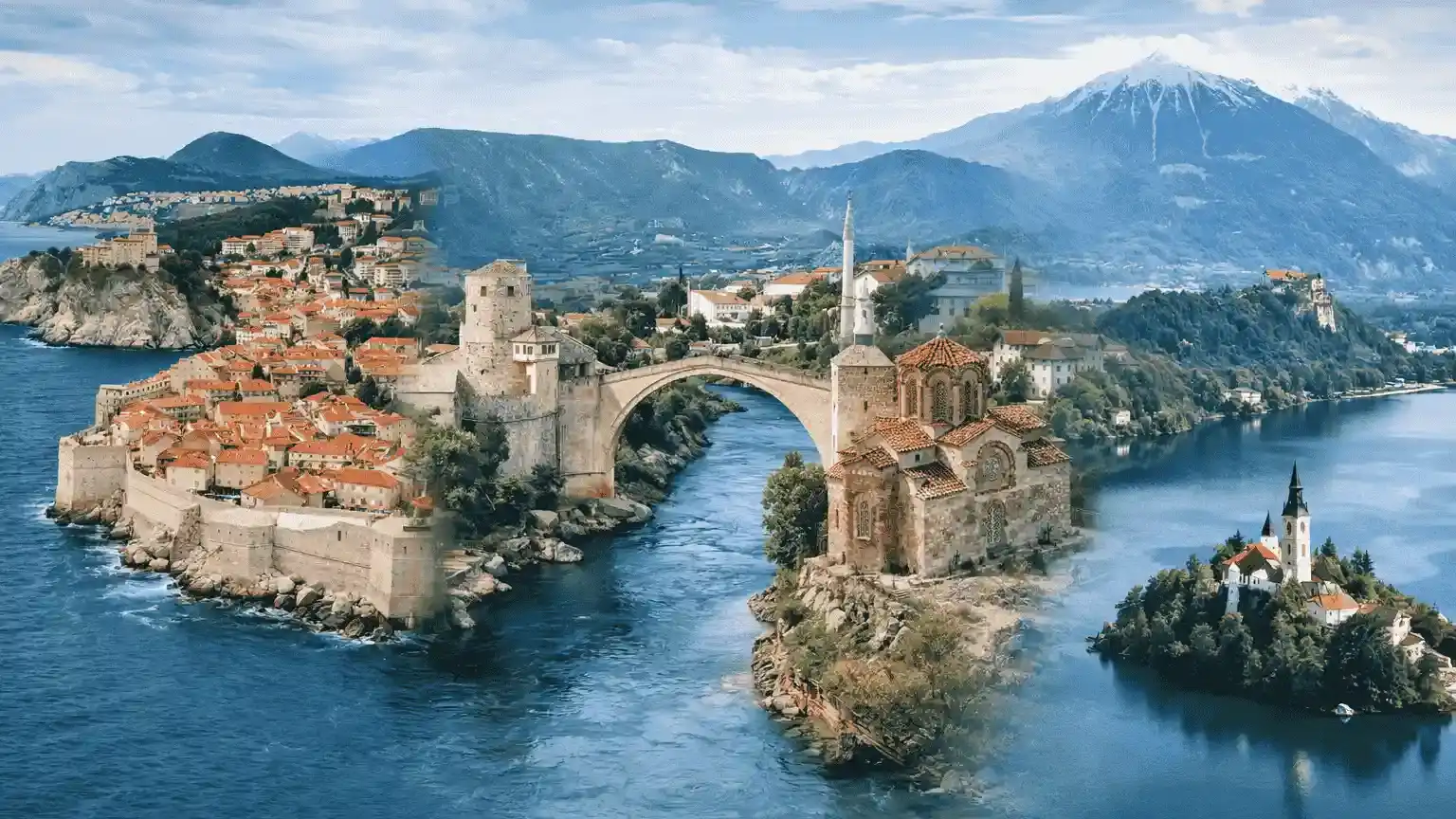
Find the Right Balkan Tour for Your Travel Style
Explore the Balkans through small group tours, private journeys, luxury escapes, and multi-country itineraries designed across Bosnia, Croatia, Montenegro, Serbia, Slovenia, Albania, and beyond.
Featured Balkan tours
Featured Balkan Journeys for 2026
Private Luxury and Small-Group departures across the Balkans—expert-led, well-paced, and seamless.
Sarajevo: Bijambare Cave & Vrelo Bosne Half-Day Tour
Multiple departures
Sarajevo: Tunnel of Hope & Trebević Cable Car Day Tour
Multiple departures
Sarajevo: Lukomir & Umoljani Nomad Villages Tour (Bjelašnica)
Multiple departures
Sarajevo: Bosnian Pyramids & Ravne Tunnels (Visoko)
Multiple departures
Sarajevo: Prokoško Lake & Fojnica Monastery Day Tour
Multiple departures
Sarajevo: Mostar & Kravica Waterfalls Day Tour (Herzegovina)
Multiple departures
Tito’s Bunker & Boračko Lake Day Trip from Sarajevo
Multiple departures
Mostar & Tito’s Bunker Day Tour (Konjic, Jablanica & Blagaj)
Multiple departures
North Macedonia, Albania, Montenegro, and more...
Explore the Balkans with Olivia: 15-Day Grand Journey
15 Days | 13 Jun 2026
From Skopje
Explore TourNorth Macedonia, Albania, Montenegro, and more...
Balkan Discovery: 12-Day Tour (North Macedonia - Slovenia)
12 Days | Next departure: 5 Apr 2026
From Skopje
Explore TourRomania, Bulgaria, North Macedonia, and more...
Grand Balkan Tour: 17-Day Romania to Slovenia Journey
17 Days | Next departure: 12 May 2026
From Bucharest
Explore TourNorth Macedonia, Albania, Montenegro, and more...
Explore the Balkans with Olivia: 15-Day Grand Journey
15 Days | 13 Jun 2026
From Skopje
Explore TourNorth Macedonia, Albania, Montenegro, and more...
Balkan Discovery: 12-Day Tour (North Macedonia - Slovenia)
12 Days | Next departure: 5 Apr 2026
From Skopje
Explore TourRomania, Bulgaria, North Macedonia, and more...
Grand Balkan Tour: 17-Day Romania to Slovenia Journey
17 Days | Next departure: 12 May 2026
From Bucharest
Explore TourNorth Macedonia, Albania, Montenegro, and more...
Explore the Balkans with Olivia: 15-Day Grand Journey
15 Days | 13 Jun 2026
From Skopje
Explore TourNorth Macedonia, Albania, Montenegro, and more...
Balkan Discovery: 12-Day Tour (North Macedonia - Slovenia)
12 Days | Next departure: 5 Apr 2026
From Skopje
Explore TourRomania, Bulgaria, North Macedonia, and more...
Grand Balkan Tour: 17-Day Romania to Slovenia Journey
17 Days | Next departure: 12 May 2026
From Bucharest
Explore TourNorth Macedonia, Albania, Montenegro, and more...
Explore the Balkans with Olivia: 15-Day Grand Journey
15 Days | 13 Jun 2026
From Skopje
Explore TourNorth Macedonia, Albania, Montenegro, and more...
Balkan Discovery: 12-Day Tour (North Macedonia - Slovenia)
12 Days | Next departure: 5 Apr 2026
From Skopje
Explore TourRomania, Bulgaria, North Macedonia, and more...
Grand Balkan Tour: 17-Day Romania to Slovenia Journey
17 Days | Next departure: 12 May 2026
From Bucharest
Explore TourNorth Macedonia, Albania, Montenegro, and more...
Explore the Balkans with Olivia: 15-Day Grand Journey
15 Days | 13 Jun 2026
From Skopje
Explore TourNorth Macedonia, Albania, Montenegro, and more...
Balkan Discovery: 12-Day Tour (North Macedonia - Slovenia)
12 Days | Next departure: 5 Apr 2026
From Skopje
Explore TourRomania, Bulgaria, North Macedonia, and more...
Grand Balkan Tour: 17-Day Romania to Slovenia Journey
17 Days | Next departure: 12 May 2026
From Bucharest
Explore TourExplore the Balkans by Destination.
Private Luxury and Small Group journeys—expert-led and well-paced.
What Defines a Balkland Journey
A refined approach to exploring Southeast Europe — executed with precision.
Handpicked Premium Stays
Boutique 4★-5★ hotels selected for character, location, and comfort.
Licensed Local Experts
Certified regional guides delivering authentic historical and cultural insight.
Seamless Cross-Border Logistics
Effortless coordination across multiple Balkan countries.
Private & Executive Transport
Modern vehicles, professional drivers, and smooth routing.
Thoughtfully Curated Itineraries
Balanced pacing, iconic landmarks, and insider access.
Dedicated Travel Designer
One expert overseeing your journey from first call to final farewell.
Choose Your Travel Style
Private Luxury and Small Group journeys tailored to your pace.
Balkland tour reviews
Real guest stories from the Balkans.
So special!
Balkan Discovery: 12-Day Tour (North Macedonia - Slovenia)
"Excellent tour. I was made to feel special right from the go, as I received a very warm welcome. I learnt so much of the history of the ..."
Tour review
Medjugorje: 7-Day Catholic Pilgrimage Tour
"I had the pleasure last year of taking the Medjugorje tour with Balkland and I have to say it was amazing! If you are looking for an expe..."
Tour review
Balkan Discovery: 12-Day Tour (North Macedonia - Slovenia)
"A visit not to be missed and to be repeated as soon as possible, Sarajevo is a beautiful city and all that surrounds this city is worth a..."
Best Tour Ever!!
Medjugorje: 7-Day Catholic Pilgrimage Tour
"Best Tour Ever!!! That is saying something since we travel by tour annually. We're already planning our next tour with Balkland!!! Mike t..."
Tour review
Sarajevo: Lukomir & Umoljani Nomad Villages Tour (Bjelašnica)
""
Amazing
Sarajevo: Bosnian Pyramids & Ravne Tunnels (Visoko), Sarajevo: Tunnel of Hope & Trebević Cable Car Day Tour
"Great activity to do with a great guide! Really nice guy who knows a lot and will help you with everything you want. The places are also ..."
Great Transfer.
Sarajevo & Belgrade Private Transfers – From & To
"すごくよいドライバーさんで楽しい時間を過ごせました!"
Excellent organization by balkland tours
Sarajevo: Bosnian Pyramids & Ravne Tunnels (Visoko)
"Excellent organization by balkland tours. The pyramid valley is interesting. I did come with a lot of equipment to scientifically the cla..."
I would highly recommend taking this tour.
"We had a great time visiting the Monastery and learning some history about the area. The forgotten village was an amazing place to see an..."
Visiting Tito's bunker is a must when in Bosnia
"Visiting Tito's bunker is a must when in Bosnia. But what sets this tour apart from others is the visit to Boracko Lake afterwards. The a..."
Great tour
Sarajevo: Bosnian Pyramids & Ravne Tunnels (Visoko)
"Bardzo ladny tunel, ciekawie opowoadajaca przewodniczka, super kierowca, ktory takze ciekawie opowiadal na temat miejsc gdzie bylem. Bard..."
Tour review
Grand Balkan Tour: 17-Day Romania to Slovenia Journey
"Súper bien nos hubiera gustado tener guía en español y no deberían mezclar gente de diferentes idiomas esto nos llevó a sentirnos excluid..."
Amazing!
Medjugorje: 7-Day Catholic Pilgrimage Tour
"Exceeded expectations. Our tour was planned to focus on UNESCO sites and Medugorje. That promise was fulfilled and more. It was a combina..."
wonderful time touring the Balkans
Balkan Discovery: 12-Day Tour (North Macedonia - Slovenia)
"Our small group of four had a wonderful time touring the Balkans. Milan, our driver is highly skilled and I always felt safe with him at ..."
Great trip!
Balkan Discovery: 12-Day Tour (North Macedonia - Slovenia)
"Our guide and our driver were excellent! Zuf knew had all the knowledge we needed. Great trip!"
Everything we did was fantastic
Grand Balkan Tour: 17-Day Romania to Slovenia Journey
"Wow - what can I say!! Everything we did was fantastic. We achieved so much in such a short time - 21 days. The itinerary was broad and c..."
A very special vacation!!
Grand Balkan Tour: 17-Day Romania to Slovenia Journey
"I had a fabulous time as we went through 9 countries of the Balkans. The experience was extremely rewarding. The local guides of each cou..."
Best Tour Ever!!!
Sarajevo: Bosnian Pyramids & Ravne Tunnels (Visoko)
"That is saying something since we travel by tour annually. We're already planning our next tour with Balkland!!! Mike treated us to an ex..."
Most popular cities
Where’s your heart calling you?
Start with our most-requested cities—then explore the journeys travellers book most.
- 23 tours
Bosnia and Herzegovina
Sarajevo
Sarajevo blends Ottoman bazaars, Austro-Hungarian charm, and modern history. Explore top sights, day trips, and tours.
See city tours - 15 tours
Bosnia and Herzegovina
Konjic
Konjic is a riverside town on the Neretva—stone bridge heritage, mountain scenery, and routes to Tito’s Bunker. Explore tours and day trips.
See city tours - 14 tours
Bosnia and Herzegovina
Jablanica
Jablanica is the Neretva Valley’s key stop—Battle of the Neretva history, river views, and routes between Sarajevo and Mostar. Tour ideas.
See city tours - 14 tours
Bosnia and Herzegovina
Mostar
Mostar (UNESCO) is Herzegovina’s icon—Old Bridge views, Ottoman streets, riverside cafés, and day trips. Explore tours and routes.
See city tours - 11 tours
North Macedonia
Skopje
Skopje blends Ottoman Old Bazaar heritage with modern monuments and riverfront views. Explore top sights, day trips, and tour routes.
See city tours - 10 tours
Montenegro
Kotor
Kotor (UNESCO) is Montenegro’s walled Bay jewel—medieval lanes, fortress views, and dramatic mountains. Explore tours and day trips.
See city tours - 10 tours
North Macedonia
Lake Ohrid
Lake Ohrid (UNESCO) is North Macedonia’s highlight—clear waters, churches, old town walks, and scenic viewpoints. Explore tours and routes.
See city tours - 7 tours
Croatia
Dubrovnik
Dubrovnik (UNESCO) is Croatia’s walled Adriatic icon—Old Town lanes, city walls, sea views, and day trips. Explore tours and routes.
See city tours - 7 tours
Bosnia and Herzegovina
Jajce
Jajce is Bosnia’s royal town—medieval fortress, Ottoman heritage, and a waterfall in the centre. Explore day trips and tour routes.
See city tours - 7 tours
Bosnia and Herzegovina
Kravica Waterfalls
Kravica Waterfalls is Herzegovina’s emerald oasis—travertine cascades, swim spots, and easy day trips from Mostar or Dubrovnik. Tour ideas.
See city tours - 7 tours
Bosnia and Herzegovina
Travnik
Travnik is Bosnia’s Ottoman-era royal town—fortress views, colorful mosques, and local flavours. Explore day trips and tour routes.
See city tours - 6 tours
Bosnia and Herzegovina
Blagaj Tekke
Blagaj Tekke is Herzegovina’s serene Dervish monastery—set at the Buna spring beneath cliffs near Mostar. Explore tours and day trips.
See city tours